Introduction
During my tenure as Managing Director of Ronik Design, I led three strategic initiatives for WNYC, New York’s flagship public-radio station:
- Infomagical - experimental audience engagement
- WNYC Platform - platform redesign
- Pique - future-focused product innovation
These projects demonstrate my ability to lead complex digital transformations, manage cross-functional teams, and drive innovation while balancing stakeholder needs.
Leadership Approach
My role at Ronik extended beyond traditional UX leadership to encompass a comprehensive range of responsibilities. As the primary liaison between agency and client teams, I fostered collaboration and ensured our project goals were met. I managed cross-functional teams, creating an environment where diverse skill sets could thrive and complement each other.
Throughout the project lifecycle, I maintained clear lines of communication across all organizational levels, from technical teams to executive stakeholders. This communication-first approach proved essential as I oversaw technical implementation phases and continuously refined our processes to meet evolving project demands. By adapting our methodologies in real-time, we responded to challenges and opportunities as they arose.
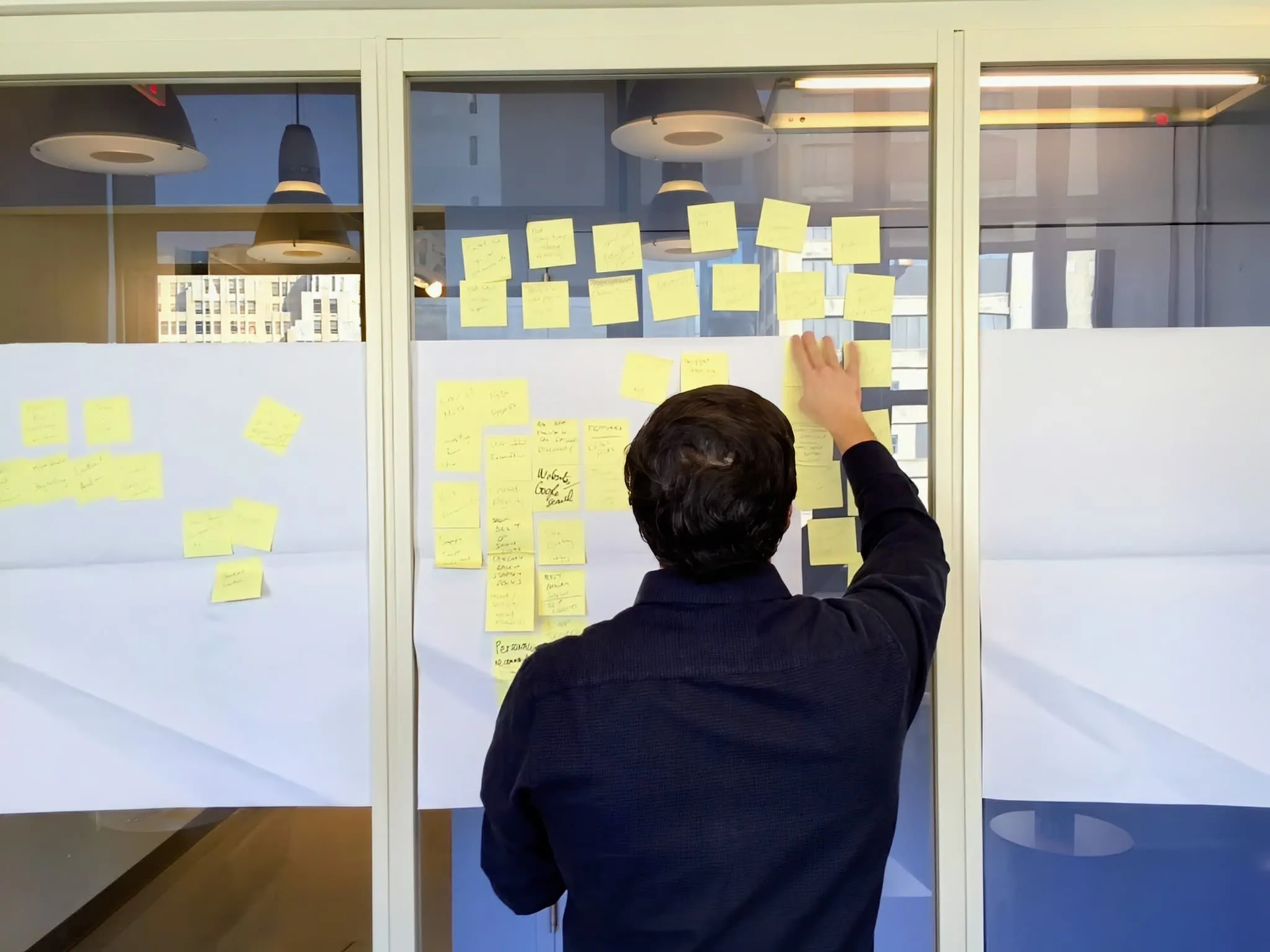
Mark leading a Design Sprint session at the WNYC office in Manhattan.
Project 1: Infomagical-Interactive digital experience for WNYC’s Note to Self podcast
WNYC’s “Note to Self” podcast aimed to transform their radio show into an innovative digital experience with “Infomagical”—a multi-week experiment engaging tens of thousands of listeners. The series addressed information overload and digital distraction in modern life. WNYC wanted an interactive companion app to guide participants through daily challenges designed to combat information anxiety and help them regain focus. Our team developed the Infomagical platform to deliver personalized SMS-based challenges, track participant progress, and provide a responsive hub for the community experiment—transforming a traditional podcast into an interactive digital experience.
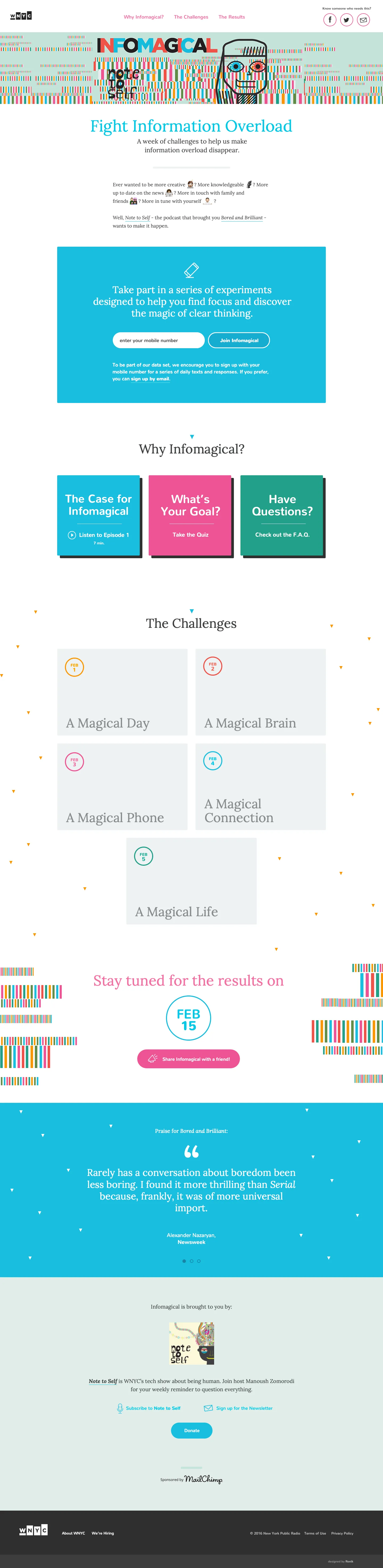
Visual design of the Infomagical page in the post-launch configuration.
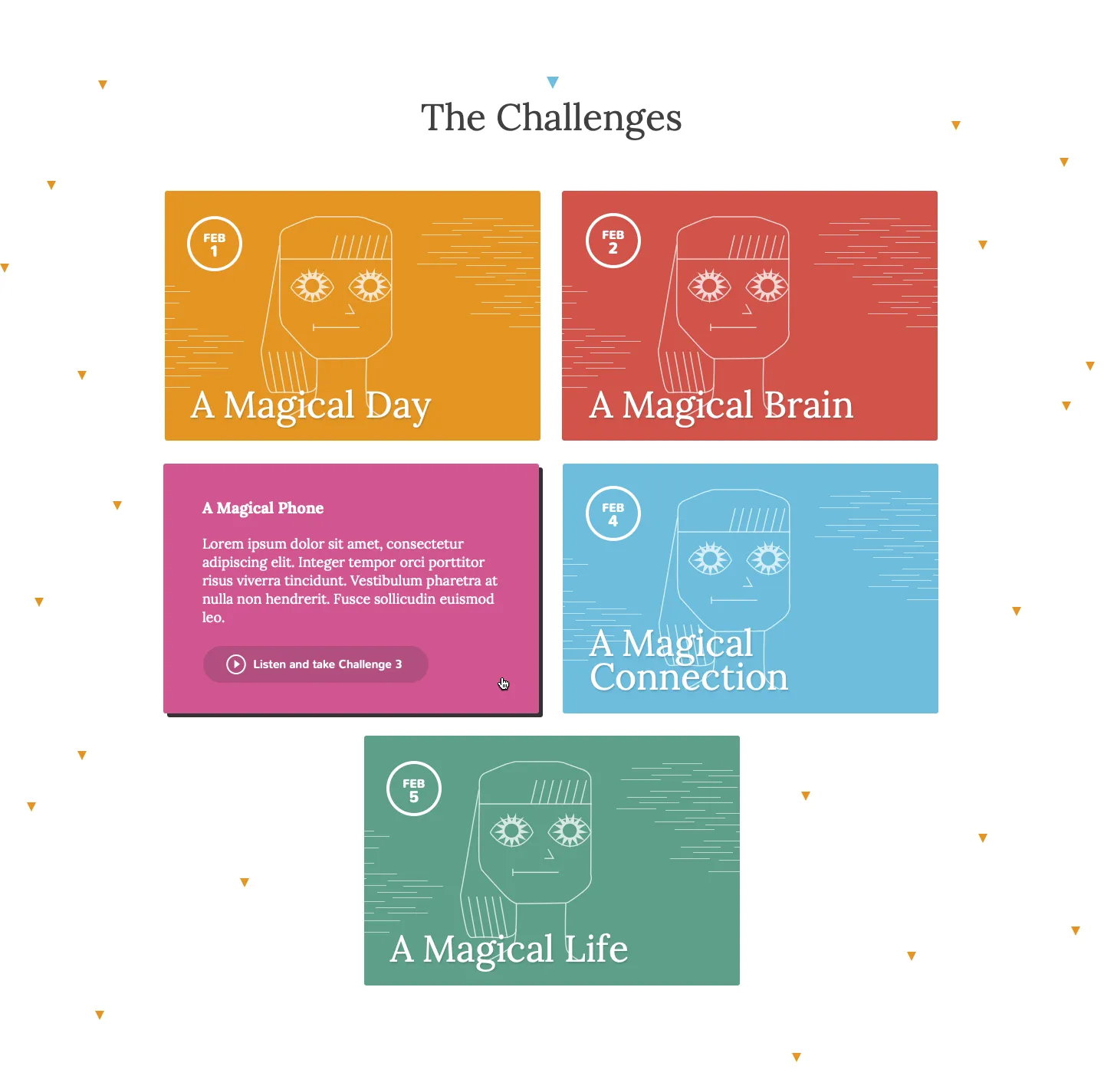
Hover effects document prepared for communication to the development team.
Cross-Functional Team Leadership
I established and led an integrated team, and brought together diverse talents from both organizations. Ronik’s digital product team comprised three designers and two developers who brought deep expertise in digital innovation. This core group worked in close collaboration with WNYC’s content team, comprising the show’s host, Manoush Zomorodi, and producer.
The collaboration with WNYC’s on-air team brought decades of audio storytelling expertise to the project, resulting in a more engaging narrative. As a regular weekend listener to public radio, I found it fascinating to see how digital and broadcast media complemented each other. When Manoush discussed the project on air, it demonstrated that we closed the loop and had integrated an innovative digital experience with WNYC’s established broadcast presence. This intersection of traditional and digital media highlighted the project’s broader impact on public radio’s evolution.
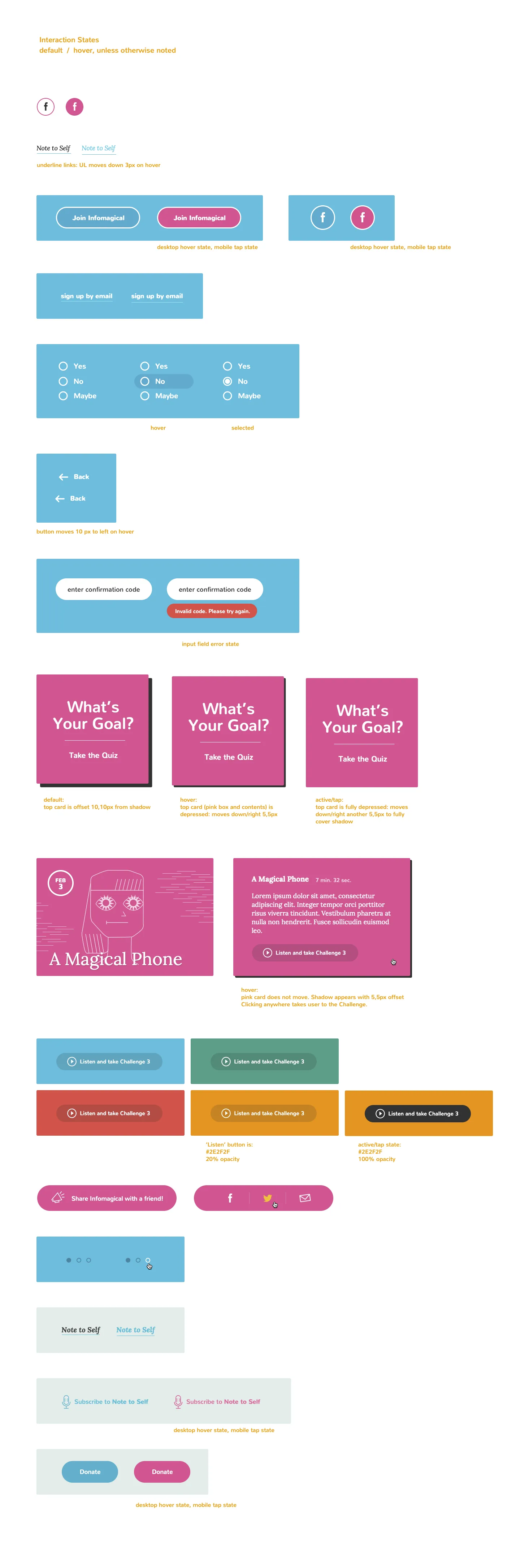
Component interaction states prepared to communicate with the development team
The challenge was creating an environment where creative and technical teams could collaborate effectively while maintaining focus on user needs and project goals. I achieved this through:
- Regular cross-team design reviews
- Clear communication channels between all parties
- Structured decision-making processes
- Balanced consideration of editorial and technical needs
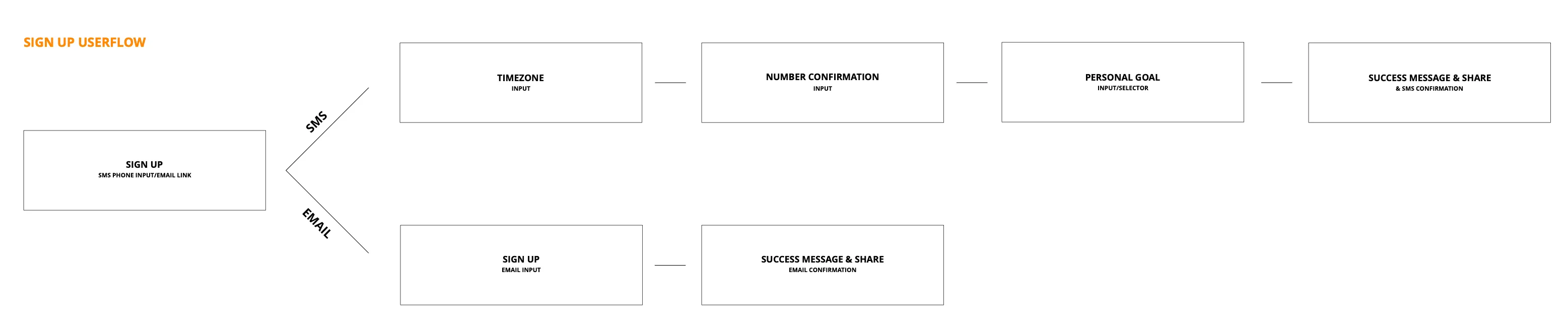
Pique sign-up user flow map prepared to communicate with the development team
Technical Direction & Implementation
In leading the technical implementation, I architected a custom microsite infrastructure. This foundation supported our SMS integration system, which handled user communication throughout the experience. I structured the user journey into three key phases: awareness, engagement and conversion, and implemented analytics to track user behavior and measure project outcomes.
- Custom microsite architecture
- SMS integration system
- Multi-phase user experience
- Analytics implementation
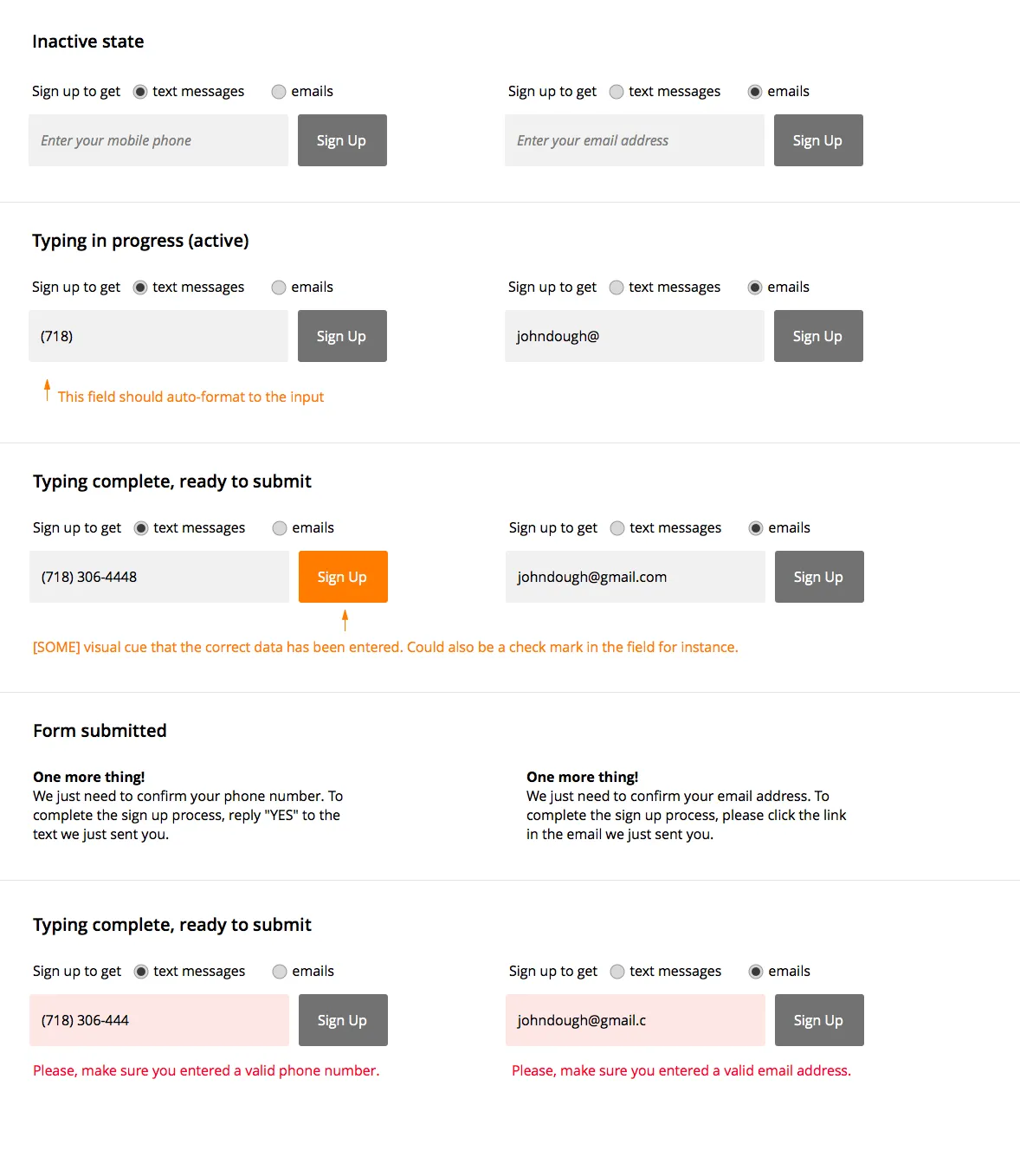
Pique form component states
Project Impact
The project proved to be a success in engaging with WNYC’s digital audience. Over 25,000 active participants embraced the initiative, generating an impressive volume of more than 300 thousand text message interactions throughout its duration. The impact was particularly noticeable in the overwhelmingly positive response from our audience, with 71% of participants expressing satisfaction with their experience. This success extended beyond just numbers—the project garnered significant media attention, effectively showcasing WNYC’s capabilities in digital innovation and establishing the organization as a pioneer in interactive public media engagement.
- Engaged over 25,000 active participants
- Managed 300 thousand text message interactions
- Achieved 71% participant satisfaction rate
- Generated significant media coverage
- Demonstrated WNYC’s digital innovation capabilities
Media Coverage
The project’s innovative approach to addressing information overload resonated well beyond WNYC’s traditional audience. From public radio networks to technology industry publications, the initiative sparked conversations about digital wellness and audience engagement in modern media. The coverage below represents key perspectives on how the project pushed boundaries in both public radio and digital experience design.
- WNYC Note to Self introduction article
- WNYC Note to Self results article
- NPR’s coverage of the project
- Fast Company’s coverage of the project
- Twilio’s coverage of the project
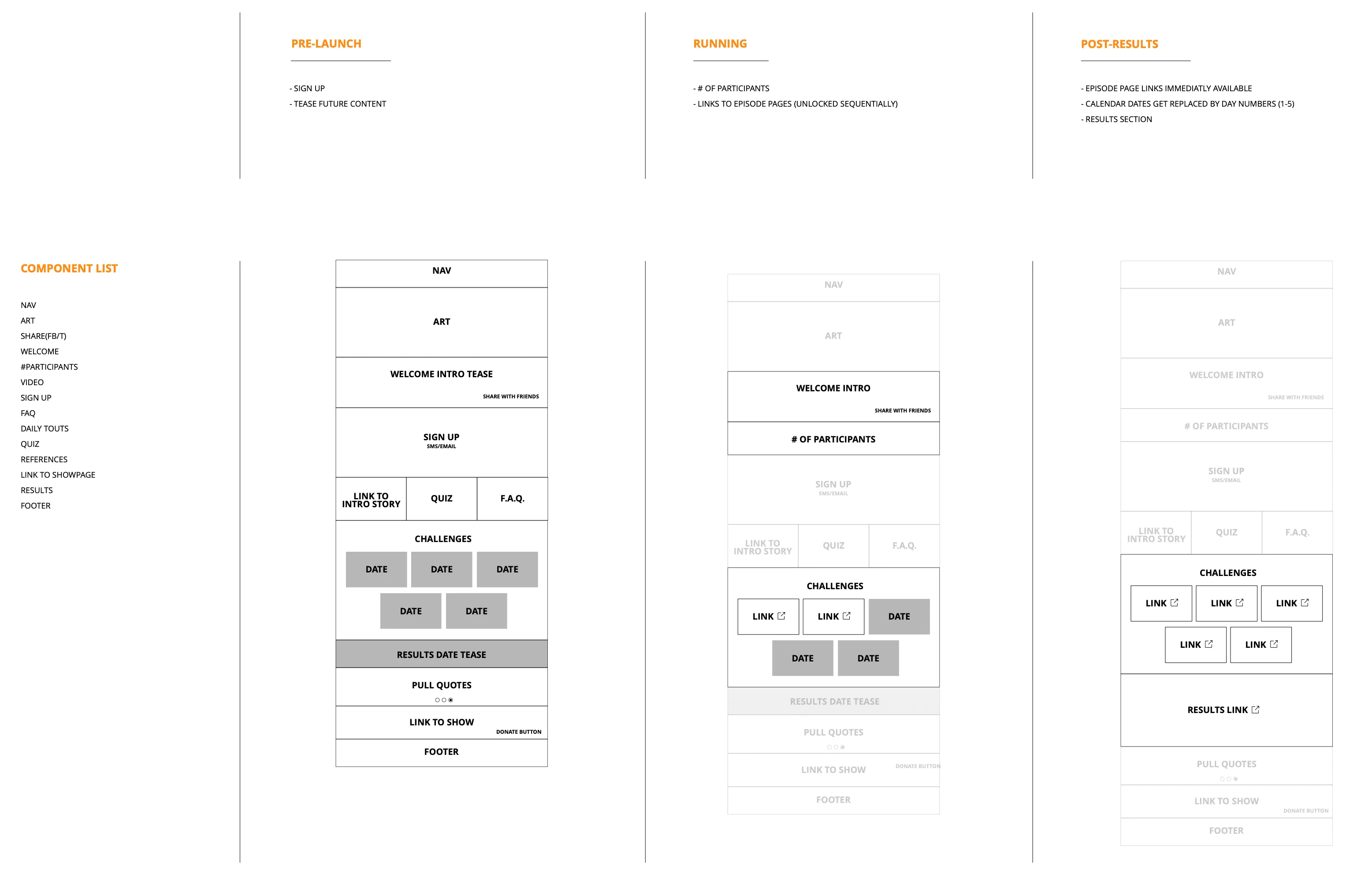
Map of how components change over the three project phases.

Pique signup flow on desktop
Project 2: WNYC Platform Redesign—Driving Digital Transformation
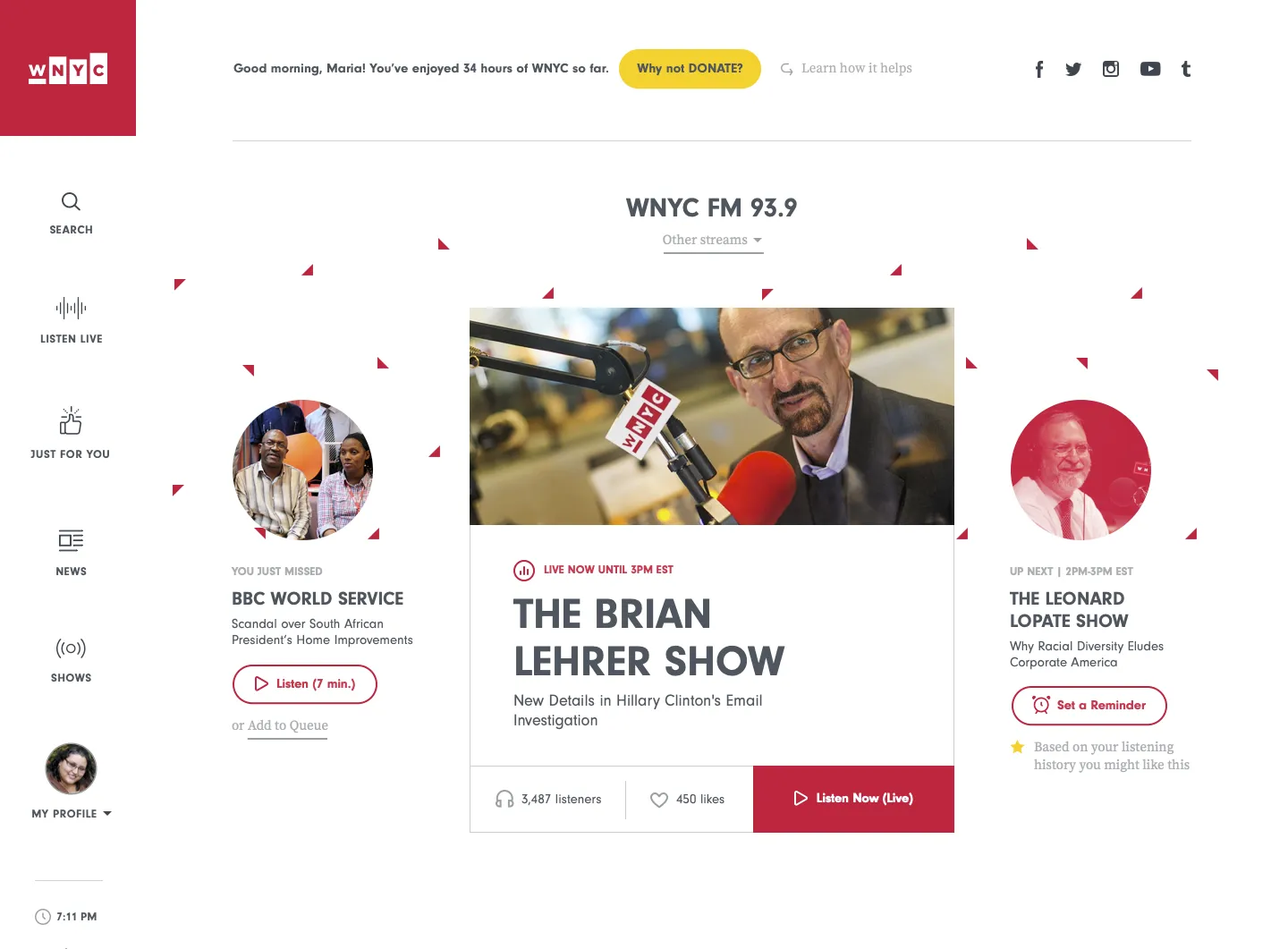
Visual design of the wnyc.org website
Strategic Leadership
At the helm of WNYC’s digital transformation, I spearheaded a comprehensive redesign that revolutionized how audiences interact with public radio content. Our strategic vision centered on creating deeper audience connections while optimizing the digital experience across all platforms. By focusing on metrics that matter - from engagement duration to donation conversion rates—we crafted a strategy that served both listeners and the organization’s sustainability goals.
Original goals included:
- Audience retention and growth
- Cross-platform engagement
- Increase listening time
- Fundraising effectiveness
Stakeholder Management
The success of our initiative hinged on orchestrating collaboration between diverse teams, each bringing unique perspectives and priorities to the table. Through regular workshops and feedback sessions, we created an environment where content creators, technical specialists, marketing strategists, and executive leadership could align their goals and work toward common goals. This collaborative approach ensured that every decision balanced editorial excellence with technical feasibility and business impact.
Key stakeholder groups included:
- Content teams focused on editorial presentation
- Technical teams evaluating implementation feasibility
- Marketing teams driving audience growth
- Executive leadership requires measurable outcomes
Design Leadership & Execution
We rooted our design approach in methodical planning and continuous validation. We established a framework that encouraged innovation while maintaining practical constraints, ensuring that every design decision served our core goals. We transformed regular stakeholder reviews into opportunities not just for feedback but for building consensus and enthusiasm around our evolving digital presence.
Core approach elements:
- Established clear goal alignment across stakeholders
- Maintained focus on measurable outcomes
- Balanced innovation with practical constraints
- Created buy-in through regular stakeholder reviews
User Experience Strategy
We reimagined the radio experience for the digital age, creating a seamless blend of traditional broadcasting and modern content consumption patterns. By developing a sophisticated personalization engine, we enabled listeners to create their own journey through WNYC’s rich content landscape, while maintaining the human curation that makes public radio special.
Key experience innovations:
- Created personalized radio experience combining live and on-demand content
- Developed curated playlists by hosts, celebrities, and community members
- Integrated social features for content sharing and community building
- Implemented seamless cross-device audio playback
Design Solutions
Our design solutions focused on creating an intuitive, cohesive experience that honored WNYC’s legacy while embracing digital innovation. The redesigned platform seamlessly integrated content discovery, playback, and community engagement, while strategically incorporating opportunities for listener support.
Key design implementations:
- Redesigned homepage emphasizing the current listening context
- Created unified audio player experience
- Developed personalized content feed
- Integrated strategic donation touchpoints
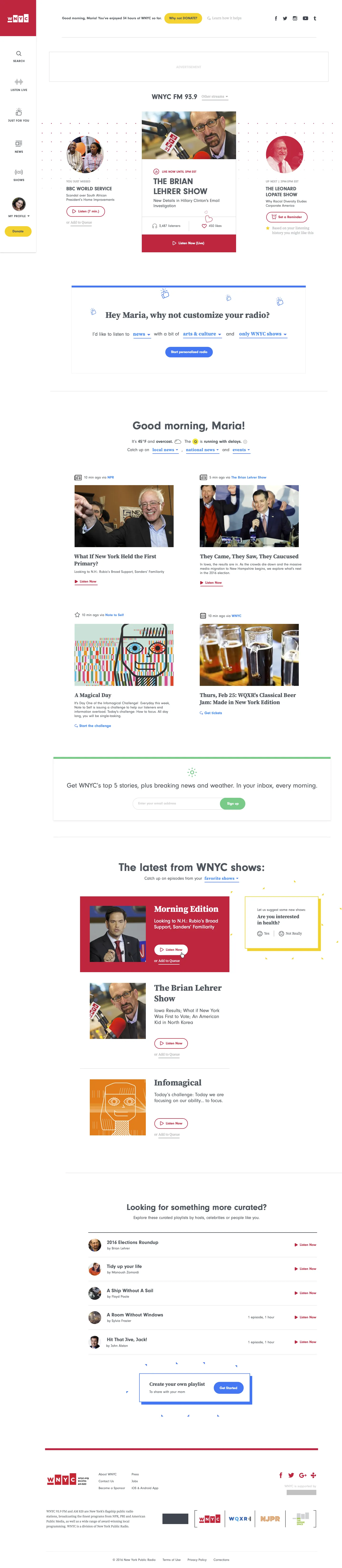
WNYC Homepage Visual Design
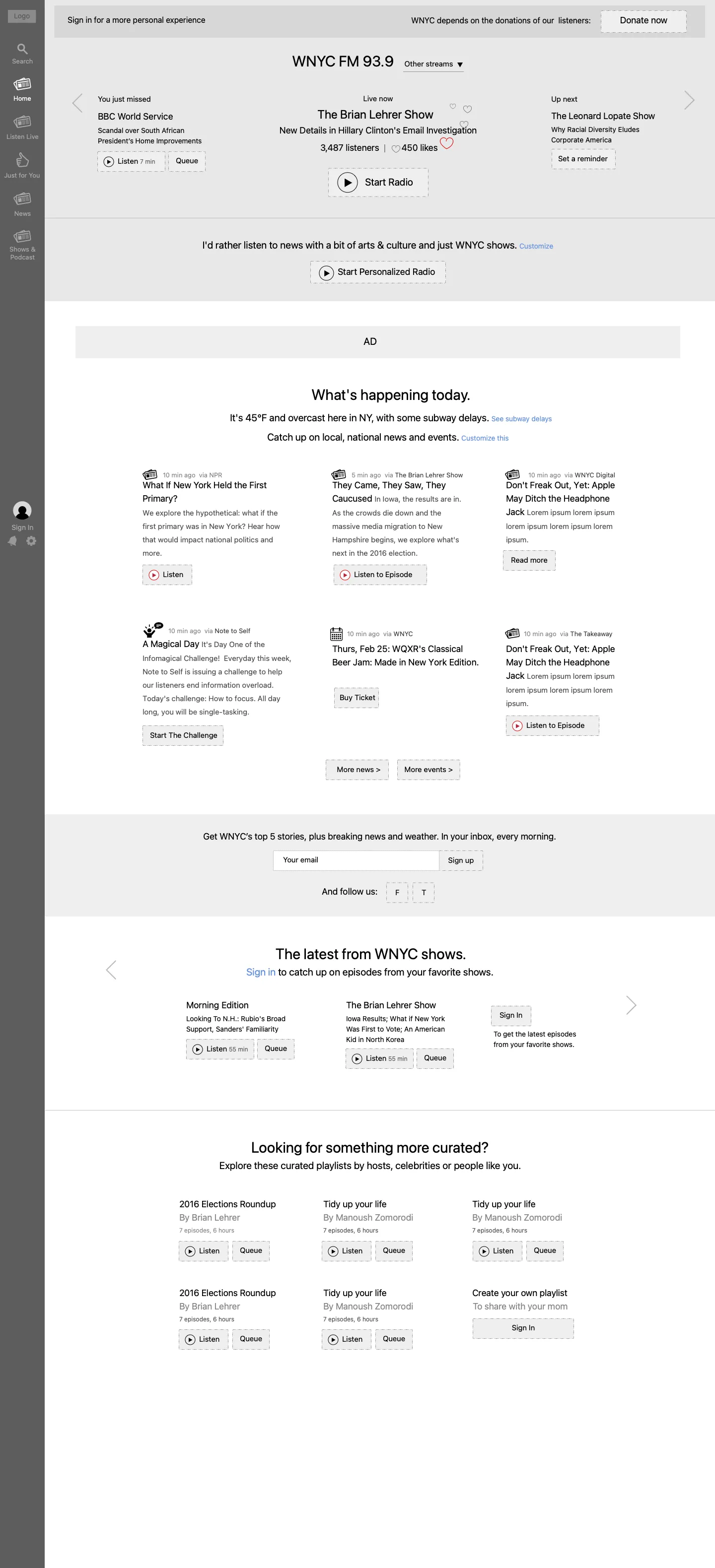
WNYC Homepage Wireframe
Design Research & Validation
We grounded our design decisions through:
- Analysis of existing WNYC audience behavior
- Review of emerging digital audio consumption patterns
- Regular feedback from WNYC’s content and technical teams
- Validation sessions with internal stakeholders
Project Outcomes
The redesign project successfully:
- Generated innovative approaches to digital audio consumption
- Created alignment around the future platform direction
- Provided the framework for incremental improvements
- Established patterns for content personalization
Although WNYC didn’t implement the full redesign as envisioned, our concepts and patterns influenced later WNYC digital initiatives.
Project 3: Pique Podcasting App—Innovation Through Design Sprint
Design Sprint Leadership
As a design leader and sprint facilitator, I orchestrated a process involving stakeholders from multiple WNYC departments, including editorial, product, design, and engineering. The challenge was adapting the methodology to work within the constraints of a large media organization while maintaining team momentum and engagement.
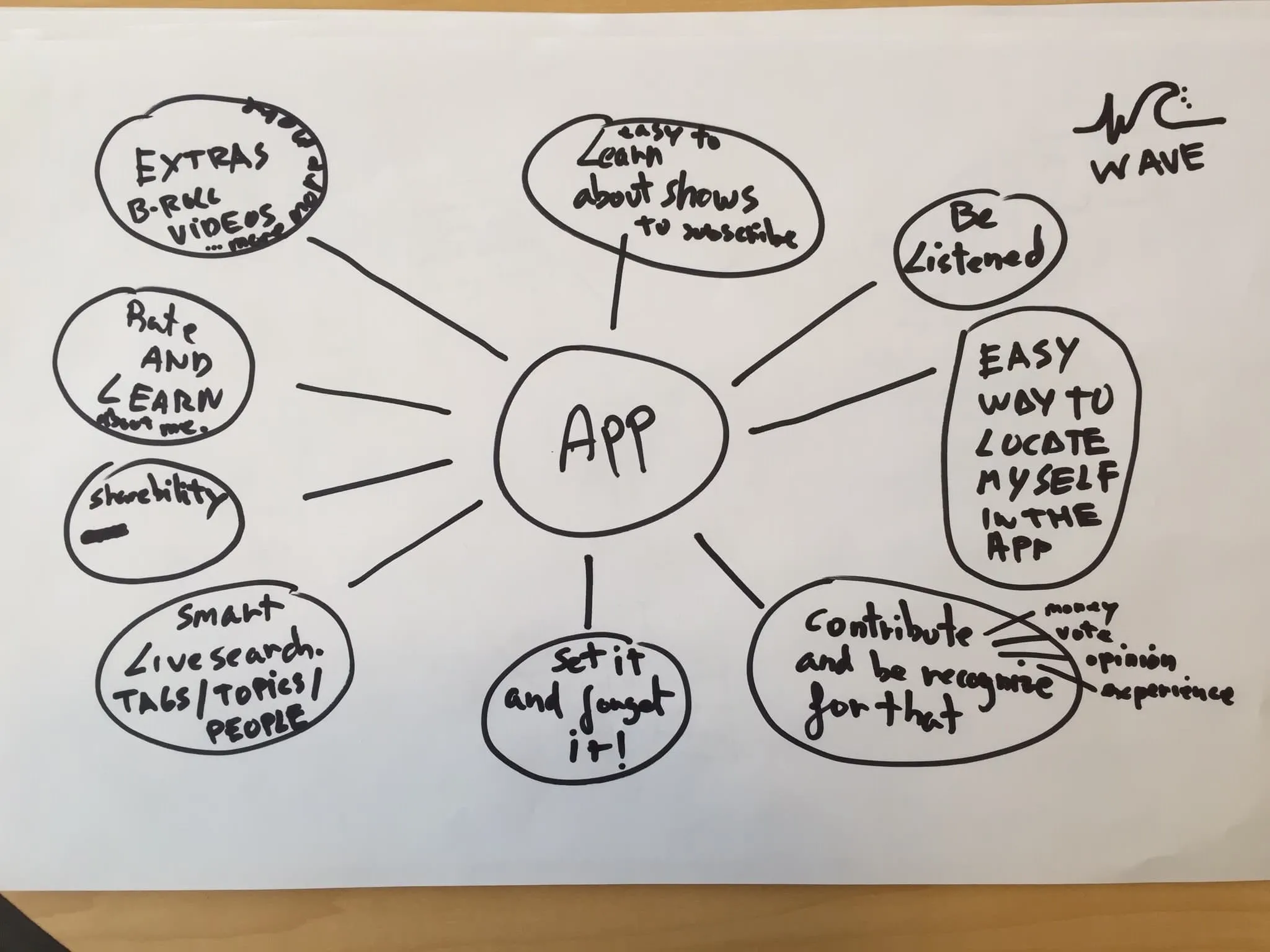
Participant solution mapping exercise artifact
Strategic Process Adaptation
Drawing on Jake Knapp’s Design Sprint methodology, I modified the standard five-day sprint into a ten-day process that would:
- Accommodate key stakeholders’ schedules across departments
- Maintain creative energy and team cohesion
- Ensure consistent participation from agency and client teams
- Create space for thorough documentation and synthesis
Sprint Structure
Day 1: Problem Definition & Mapping
- Define key questions and project goals
- Map current WNYC mobile product experience
- Identify opportunities in the podcast space
- Build shared understanding across stakeholders
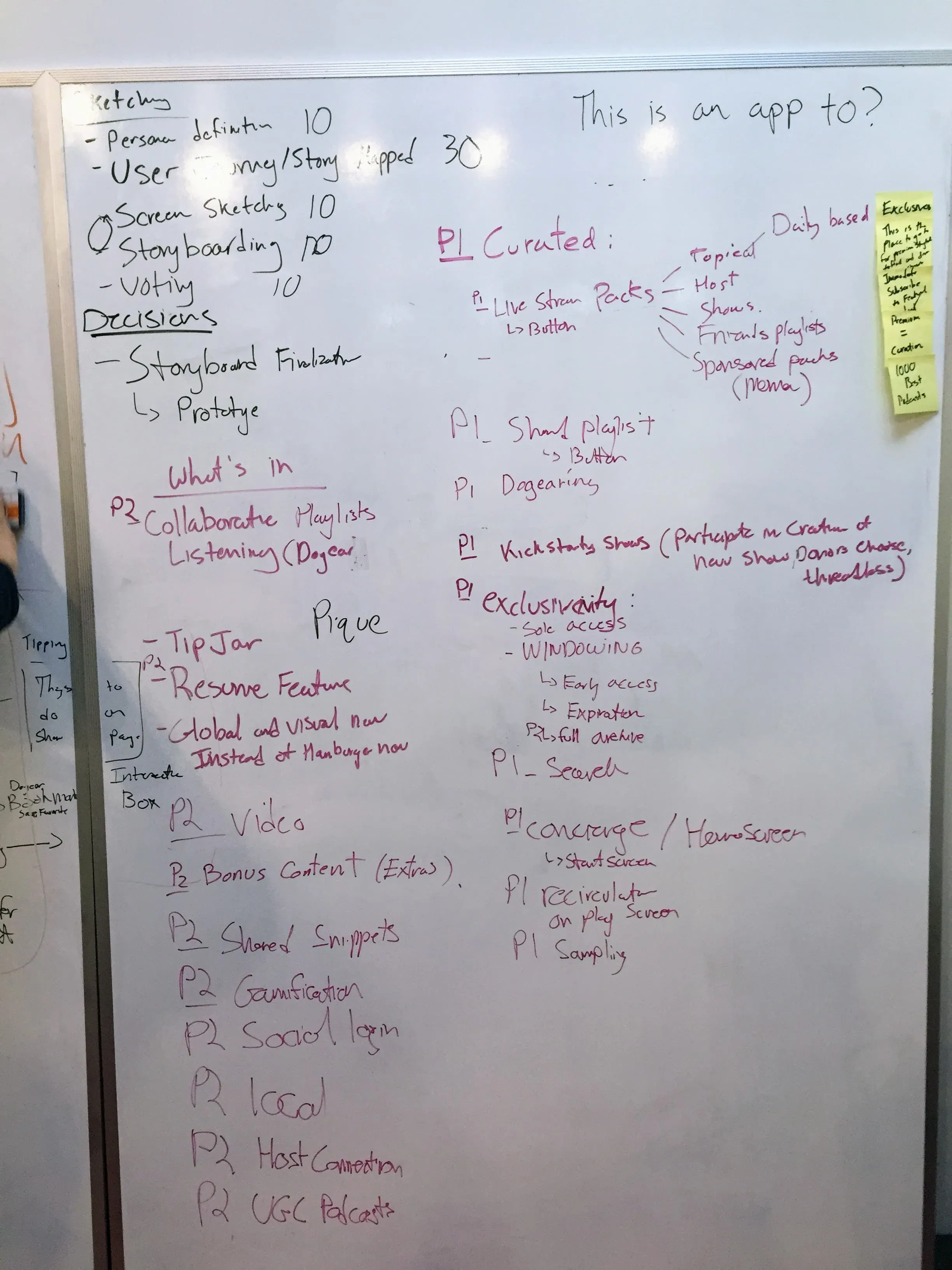
Design Sprint whiteboard showing activities and decisions
Day 2: Solution Sketching
- Facilitate structured sketching exercises
- Capture technical and editorial perspectives
- Explore multiple product directions
- Encourage individual ideation

Participant Storyboards from design sprint activity
Day 3: Solution Evaluation
- Implement a structured voting system
- Facilitate direction discussions
- Build consensus around a final approach
- Prepare foundation for prototyping
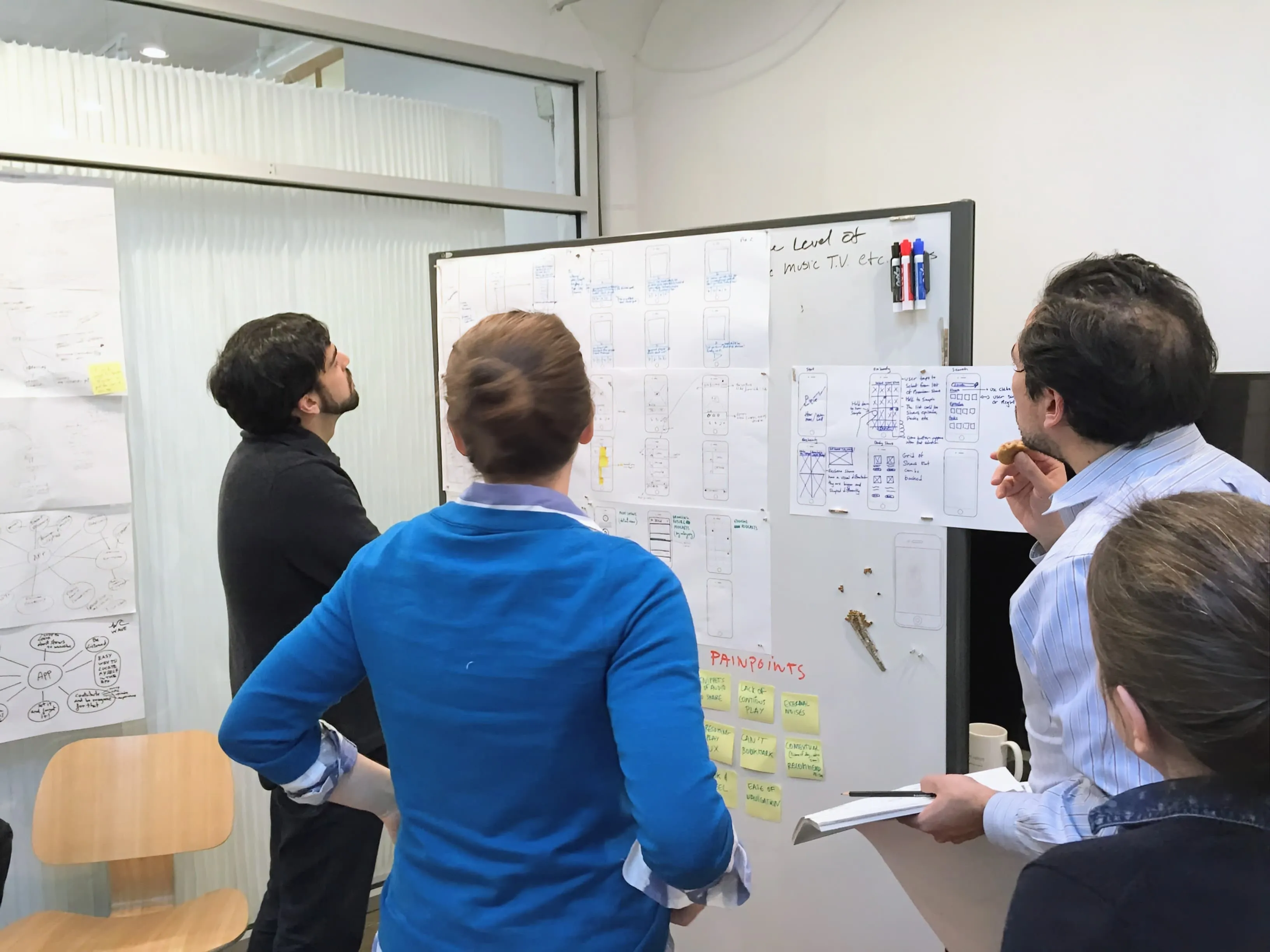
Mark leading participants in a design sprint exercise.
Day 4: Prototype Development
- Focus on core user flows
- Build interactive HTML prototype
- Simulate key product features
- Prepare testing scenarios
Day 5: User Testing
- Conduct four one-on-one usability sessions
- Test with recruited WNYC listeners
- Gather qualitative feedback
- Document key findings
Prototype of Pique app delivered for user testing at the end of the design sprint.
Analytics Platform Development
Following the sprint, we developed a comprehensive analytics dashboard giving WNYC unprecedented insight into audience engagement.
Real-Time Insights
- Live listener counts with geographic distribution
- Current episode performance metrics
- Instant feedback on content engagement
Episode Performance
- Detailed listening patterns and drop-off points
- Total listens and unique listener counts
- Listener retention analysis
- Episode comparison tools
Audience Engagement
- Returning listener metrics
- Bookmark and sharing analytics
- Cross-episode listening patterns
- Content category performance
Monetization Metrics
- Donation conversion tracking
- Ad impression delivery
- Show-specific generosity indices
- Historical funding patterns
Dashboard Design
The interface served different user needs through:

Pique analytics dashboard. Delivered as a post-design sprint continuation of the project.
Information Hierarchy
- High-level show health indicators
- Detailed episode analytics
- Historical trend analysis
- Comparative performance metrics
Visual Data Presentation
- Interactive trend graphs
- Real-time listener visualizations
- Engagement funnel displays
- Custom reporting tools
Strategic Impact
- Enable data-driven content decisions
- Provide detailed insight into listener behavior
- Support monetization strategies
- Differentiate WNYC’s platform from competitors
Skills & Methods
Throughout these projects, I honed a comprehensive set of capabilities that were essential for successful delivery across multiple complex initiatives. My role demanded expertise across four key domains:
Design Leadership
At the heart of our success was a strong design-driven approach. I led several design sprints, adapting our methodology to meet project-specific needs while maintaining efficiency. My focus on developing reusable design systems ensured consistency across platforms while speeding up our delivery timeline. Working closely with stakeholders, I shaped cross-platform product strategies that aligned with both user needs and business objectives, creating cohesive information architectures that supported intuitive user experiences. Through interactive prototyping and careful visual direction, we were able to iterate quickly and maintain high design standards throughout each project.
- Design sprint facilitation and adaptation
- Design system development
- Cross-platform product strategy
- Information architecture
- Interactive prototyping
- Visual design direction
Research Methods
We rooted our approach in user research and validation. I orchestrated comprehensive usability testing programs, conducting and analyzing user interviews to gather critical insights. We measured the impact of our design decisions and validated our prototypes through analytics and real user data. Regular stakeholder interviews and structured design critiques helped us ensure our solutions met both user needs and business requirements, while maintaining high design standards.
- Usability testing coordination
- User interview facilitation
- Analytics implementation
- Prototype validation
- Stakeholder interviews
- Design critique facilitation
Technical Direction
The technical complexity of these projects required careful architectural planning and implementation. I oversaw the development of sophisticated frontend architectures integrated with content management systems, ensuring scalability and maintainability. We paid special attention to implementing reliable SMS systems and comprehensive analytics dashboards. One of our key achievements was developing reliable cross-platform audio playback capabilities while maintaining performance across all platforms.
- Frontend architecture planning
- CMS platform integration
- SMS system implementation
- Analytics dashboard development
- Cross-platform audio playback
- Performance optimization
Team Management
Success in these projects relied heavily on effective team leadership and collaboration. I managed cross-functional teams while fostering strong agency-client relationships through clear communication channels. My role included mentoring design team members, establishing and documenting processes, and implementing efficient sprint planning methods. This comprehensive approach to team management ensured consistent delivery while maintaining team morale and professional growth.
- Cross-functional team leadership
- Agency-client collaboration
- Stakeholder communication
- Design team mentorship
- Process documentation
- Sprint planning
Lessons Learned
These projects provided valuable insights that shaped my leadership approach and transformed how I think about digital product development.
Adapting Processes for Scale
The Infomagical project served as a crucial learning experience in scaling design processes for mass deployment. With over 25,000 participants, we quickly discovered that we needed to significantly adapt our standard approaches. Our team developed comprehensive systems that could handle the increased load while maintaining quality and user experience. We established clear communication protocols that ensured every team member stayed aligned with our goals. Documentation became paramount—we recorded every decision, no matter how small, for future reference and team alignment. We also learned to expect and plan for various user engagement scenarios, creating contingency plans for different levels of participation.
Key elements that proved essential:
- Building reliable, scalable systems
- Creating clear team communication channels
- Documenting decisions thoroughly
- Planning for multiple engagement scenarios
Balancing Innovation and Practicality
The WNYC redesign project taught us valuable lessons about managing the delicate balance between innovative vision and practical constraints. We discovered that success lay not in choosing one over the other, but in finding creative ways to achieve both. By maintaining constant communication with stakeholders and involving them in key decisions, we built strong support for our initiatives. We developed systematic frameworks for evaluating speculative design concepts, ensuring that our ideas stayed grounded in practical reality. Throughout the process, we maintained detailed documentation of our successes and failures, creating a valuable knowledge base for future projects.
Critical takeaways included:
- Balance ambitious vision with practical constraints
- Build stakeholder buy-in through consistent involvement
- Create frameworks for evaluating speculative design
- Document lessons learned from the design concepts
Leadership Through Structure
During the Pique design sprint, we refined our understanding of effective leadership in complex digital projects. The experience showed us that successful leadership isn’t just about making decisions, but about creating structures that enable better decision-making across the entire team. We learned to adapt established methodologies to fit our organization’s unique culture and needs. By maintaining clear goals and milestones, we kept the team motivated and focused even during extended project timelines. Our structured approach to decision-making helped build consensus among diverse stakeholders, while our systematic analysis of user feedback grounded our product decisions in real user needs.
Essential leadership insights gained:
- Adapt methodologies to organizational needs
- Maintain team momentum across extended timelines
- Build consensus through structured decision-making
- Transform user insights into product directions
Conclusion
My experience leading WNYC’s digital transformation initiatives stands as a testament to the multifaceted nature of modern design leadership. Throughout these projects, I demonstrated the critical ability to navigate complex digital initiatives from initial concept through successful delivery, while simultaneously juggling diverse stakeholder needs and expectations.
The scope and scale of these projects required me to continuously adapt and refine our design processes. By maintaining a delicate balance between innovation and practicality, we were able to push boundaries while delivering tangible results. One of my proudest achievements was building and mentoring high-performing teams that could rise to these challenges.
Looking back, these transformative projects have profoundly influenced my philosophy of design leadership. I’ve learned to embrace an approach that is both pragmatic and innovative, implementing structured methodologies that remain flexible enough to adapt to changing circumstances. Above all, I’ve maintained an unwavering focus on delivering value through exceptional user experiences.
The bigger takeaway: design leadership is more than shipping product. It’s about building good teams, putting durable processes in place, and giving people room to do their best work.
Key accomplishments included:
- Lead complex digital initiatives from concept through delivery
- Manage diverse stakeholder relationships
- Adapt and scale design processes
- Drive innovation while maintaining a practical focus
- Build and mentor high-performing teams